


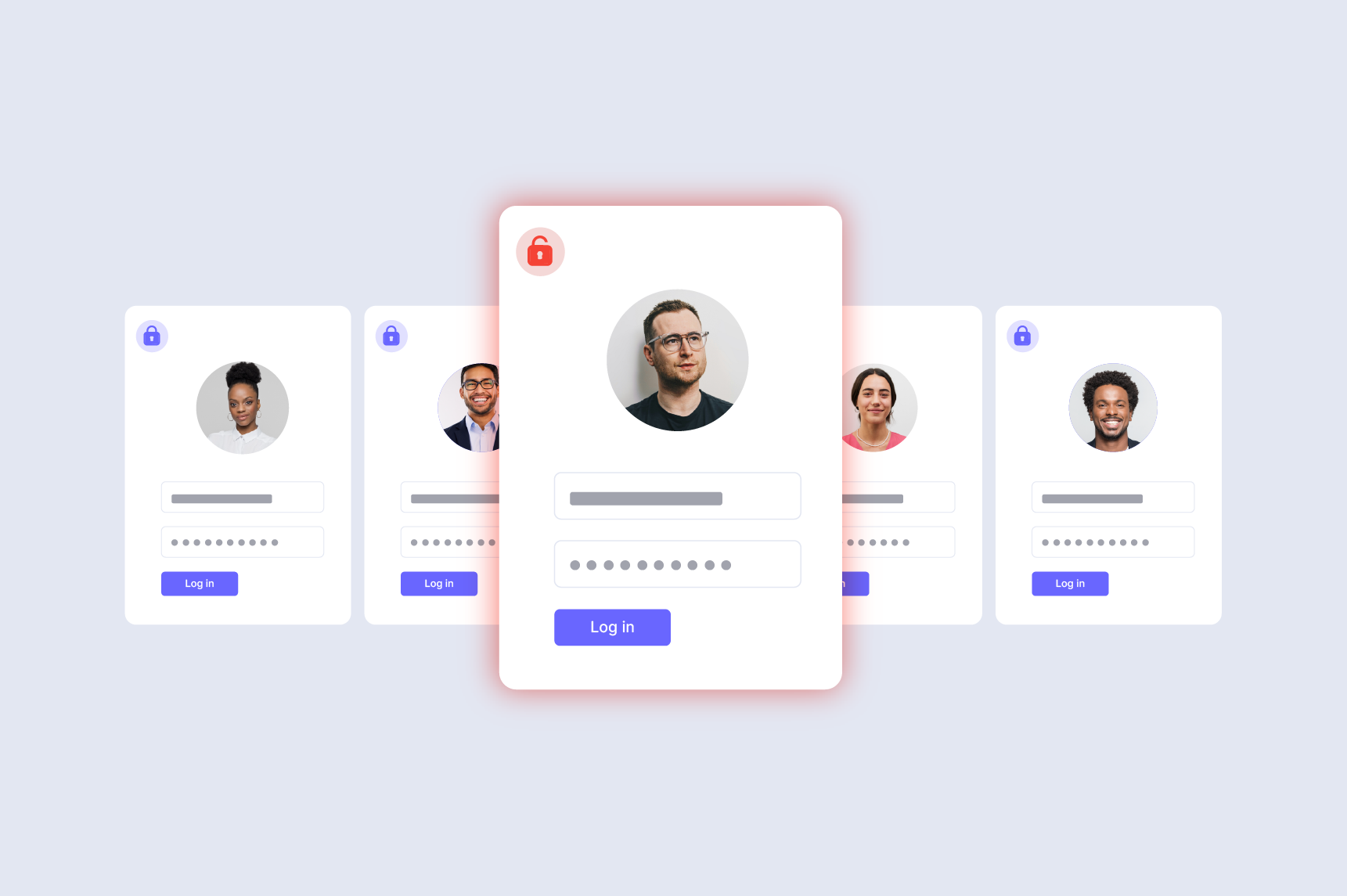
Learn what account takeover (ATO) attacks are, how they work, and proven strategies—like MFA, training, and sandboxing—to prevent costly breaches.
There are different types of cyberattacks, and the majority of them aim to steal user credentials to gain unauthorized access to protected resources. A notable attack type that targets business users is account takeover (ATO). In this attack, adversaries use different malicious methods to illegally access a target user's account.
What is an account takeover attack? Account takeover attacks (ATOs) are a type of cyberattack where criminals gain unauthorized access to user accounts using stolen credentials or social engineering. Once inside, they can steal data, commit fraud, or impersonate the victim for further attacks. |
Account takeover represents one of the most damaging forms of cybercrime for organizations today. According to the FTC, this type of attack is growing at an exponential rate, as more than 1.1 million identity theft reports were filed in 2024, and the majority of them are considered as a result of an ATO attack.
Unlike other attacks that might target systems or networks, ATO attacks focus on the human element by compromising legitimate user accounts. Once attackers gain control of an account, they acquire all the permissions and access rights of that user, which allow them to move laterally through systems, steal sensitive data, conduct financial fraud, or launch further attacks from a trusted position within the organization.
ATO attacks are expected to intensify in the future. US merchants have lost $25.6 billion due to account takeovers in 2020, and the number is expected to reach $91 billion by 2028. The fintech and financial sectors were among the most targeted industries, experiencing a surge of approximately 122% in ATO attacks.
In this article, we will discuss how ATO attacks occur and suggest mitigation strategies to prevent this type of attack.
How does an account takeover occur?
There are several techniques employed by threat actors to execute account takeover attacks. The most prominent attack vectors are phishing, malware, credential stuffing, and man-in-the-middle attacks.
Phishing
Phishing is a type of social engineering attack where cybercriminals use psychological tricks to persuade unsuspecting users to share their account credentials or to take other actions that benefit the attacker, like installing malware on their devices.
In general, phishing involves sending many emails to various users at once, hoping that some will fall for the trap. Spear phishing is a specific type that targets an individual with a personalized attack. These attacks require the attacker to gather information about their target before writing the email; this information is often collected using OSINT techniques.
Phishing is the primary attack vehicle used by hackers to execute ATO attacks. The attack begins by sending a phishing email that requests the user to update their account credentials by entering them into a website, which is fake, or requests the user to open an attachment that installs malware silently on the end-user device to steal their credentials.
Malware
In many instances, the phishing email contains either an attachment such as a PDF or MS Word file, or a link to a website that contains a program the user needs to install, which includes the malware. The malware is commonly a keylogger or a Trojan horse that monitors the target user's device and records everything they type on their keyboard and sends it back to the attacker's device.
An example of malware that uses this method to infect is the Emotet malware, which uses infected Word documents disguised as invoices or shipping notifications. When users enable macros (as prompted by the fake document), the malware installs itself and begins capturing login credentials from browsers, email clients, and installed business applications.
Credential stuffing
In credential stuffing, attackers use credentials stolen from a previous data breach to access target accounts. For example, large numbers of credentials are already advertised on the darknet. Attackers can go to the dark web and purchase particular credentials to access relevant accounts.
This attack is successful due to the fact that a large number of internet users use the same username and password across different online accounts. For instance, a study by Forbes Advisor found that 78% of individuals admitted they use the same password for more than one account. For example, the username could be their email address and they use the same passwords on different accounts. When hackers get access to one set of credentials, they can use it to access different accounts belonging to the same user.
Is your investigation leading you to the dark web? Ensure your digital investigations are secure and truly anonymous with Silo Workspace: the cloud-based, multi-application platform that puts you in-region with the tools you need to track leads across networks, websites, and apps. Try Silo Workspace free for 30 days. |
Man-in-the-middle (MTM) attacks
In MitM attacks, adversaries position themselves between the user and the target point they are connecting to. The attacker then intercepts everything a user types online, including their account credentials. MitM attacks are commonly executed on public networks that lack adequate security measures, such as restaurant public hotspots and WiFi networks available on public transportation and airports.
How can you prevent account takeover attacks?
There are different countermeasures that organizations can take to ensure account takeover prevention:
- Train your employees to detect phishing emails through security awareness training
- Enforce multifactor authentication
- Use sandboxing to analyze suspicious files and websites
- Monitor for credential reuse
End-user cybersecurity awareness training
Humans are the weakest link in any cyber defense strategy. Regardless of all installed security solutions, if a user falls victim to a phishing attack, then all security measures can fail.
Organizations should work to educate their employees about how account takeover attacks take place and the best methods to prevent such attacks. A well-informed workforce acts as the first line of defense, capable of identifying and reporting threats before they cause damage.
What employees need to learn:
- How to recognize phishing emails: Employees should be trained to spot suspicious email characteristics like using urgent language that demand immediate action, unexpected attachments or links, sender addresses that do not match the sender organization, grammatical errors or awkward phrasing, and requests for sensitive information, such as account credentials, that legitimate companies would never ask for via email.
- Best practices when creating their passwords: Employees should understand the importance of creating strong, unique passwords for each account. These passwords should be stored in a password manager to keep them secure.
- Social engineering awareness: Attackers often use human psychology, such as urgency, authority, or fear. Train employees to spot when someone tries to pressure them into skipping routine security procedures, which can happen through email, phone calls, or even face-to-face interactions.
Enforce multifactor authentication (MFA)
Multifactor authentication protects a user account with more than just a single password. For example, it combines a password with a one-time password sent via email, SMS message, or through an authenticator app such as Google Authenticator. This stops cyber attackers from accessing compromised accounts with only the password.
Even if attackers manage to steal a user's password through phishing, keylogging, or data breaches, they still cannot get into the account without another authentication factor. This greatly lowers the success rate of account takeover attempts. According to Microsoft, multifactor authentication can block more than 99.2% of account compromise attacks.
Use sandboxing technology
Sandboxing technology lets organizations open suspicious programs and emails in a secure environment, which helps them protect their production IT systems. For instance, if someone receives a phishing email with a harmful attachment, opening it in a sandbox will stop the malware from infecting the main computer. Instead, the infection stays contained within the sandbox environment.
Modern sandboxing solutions check attachments and links in real-time before they reach employees' inboxes. For instance, when a phishing email arrives with a malicious MS Word document or Excel file, the sandbox automatically runs it in isolation. The malware activates, tries to set up command and control connections, and attempts to install its keylogger, but this all occurs in a safe environment where it cannot cause any damage. The security system records the malicious actions, blocks the email, and notifies administrators.
Go ahead. Click that suspicious-looking link. Silo Workspace isolates your device from external threats in a cloud-based environment, enabling you to conduct deep research on the web and in full desktop apps like Telegram. Try it free for 30 days. |
Account takeover attacks are a growing threat to organizations, with losses expected to reach $91 billion by 2028. Attackers exploit human weaknesses through phishing, malware, credential stuffing, and man-in-the-middle attacks to gain unauthorized access to user accounts. The impact goes beyond immediate financial losses and includes regulatory fines, damage to reputation, and disruptions to operations.
Organizations can protect themselves against ATO attacks by using a multi-layered security strategy that includes end-user cybersecurity training, mandatory multifactor authentication, and sandboxing technology. By educating employees and using strong technical controls, businesses can greatly reduce their risk of this harmful type of cybercrime.
Account takeover attack FAQs
What is an account takeover?
An account takeover (ATO) happens when cybercriminals gain access to legitimate accounts using stolen or reused credentials. Attackers use phishing, credential stuffing, and malware to breach accounts and steal data or funds.
How can organizations prevent account takeover attacks?
Organizations can prevent ATO attacks by combining employee training, multifactor authentication, and sandboxing tools that analyze suspicious emails or attachments before they reach users.
Why is multifactor authentication effective against ATO attacks?
Multifactor authentication (MFA) blocks over 99% of credential-based attacks by requiring a second verification factor beyond passwords, making stolen credentials nearly useless.
What industries are most at risk of account takeover?
Financial services, fintech, and e-commerce sectors are frequent ATO targets due to valuable account data and transaction volume. Attackers exploit reused credentials and weak authentication systems.
Tags Fraud and brand misuse SOC
